


Communicating-the-general-policies-of-"health"-in-the-Islamic-Republic-of-Iran
Communicating-the-general-policies-of-"health"-in-the-Islamic-Republic-of-Iran
Ayatollah Khamenei, the Leader of the Islamic Revolution, in implementation of Clause 1 of Principle 110 of the Constitution, communicated the general policies of "Health," which were determined after consultation with the Expediency Discernment Council. Clause 12 of these policies pertains to Traditional Persian Medicine.
The text of the general health policies, communicated to the heads of the three branches of government and the head of the Expediency Discernment Council, is as follows:
In the Name of God, the Most Gracious, the Most Merciful
General Health Policies
1. Providing educational, research, health, treatment, and rehabilitation services based on human-Islamic principles and values and institutionalizing them in society.
1-1. Enhancing the system for selecting, evaluating, and educating professors, students, and managers, and transforming academic and university environments in accordance with Islamic values, medical ethics, and professional etiquette.
2-1. Raising public awareness of their rights and social responsibilities and utilizing the capacity of healthcare provision environments for the growth of spirituality and Islamic ethics in society.
2. Realizing a comprehensive health approach and a healthy human in all laws, executive policies, and regulations, observing:
1-2. Priority of prevention over treatment.
2-2. Updating health and treatment programs.
3-2. Reducing health-threatening risks and pollutions based on valid scientific evidence.
4-2. Preparing a health annex for major development plans.
5-2. Improving health indicators to achieve the first position in the Southwest Asian region.
6-2. Reforming and completing monitoring, supervision, and evaluation systems for the lawful protection of the rights of people and patients and the proper implementation of general policies.
3. Enhancing the mental health of society by promoting the Islamic-Iranian lifestyle, strengthening the family foundation, removing stress-inducing obstacles in individual and social life, promoting ethical and spiritual education, and improving mental health indicators.
4. Establishing and strengthening the necessary infrastructure for the production of pharmaceutical products and raw materials, vaccines, biological products, and medical supplies and equipment with international quality and standards.
5. Organizing demand and preventing induced demand, permitting prescription only based on the referral system and clinical guidelines, the generic scheme, and the national drug system, and efficient policy-making and supervision over the production, consumption, and import of medicines, vaccines, biological products, and medical equipment with the aim of supporting domestic production and developing exports.
6. Ensuring food security and equitable access for all members of society to a healthy, desirable, and sufficient food basket, clean air and water, public sports facilities, and safe health products while observing national standards and regional and global criteria.
7. Separating the duties of trusteeship, financing, and procurement of services in the health sector with the aim of accountability, achieving justice, and providing desirable treatment services to the people as follows:
1-7. Trusteeship of the health system, including executive policy-making, strategic planning, evaluation, and supervision, by the Ministry of Health and Medical Education.
2-7. Management of health resources through the insurance system, centered on the Ministry of Health and Medical Education, with the cooperation of other centers and institutions.
3-7. Procurement of services by service providers in the public, general, and private sectors.
4-7. Coordination and organization of the above affairs according to the mechanism that the law will determine.
8. Increasing and improving the quality and safety of comprehensive and integrated health services and care, centered on justice and emphasizing accountability, transparent information dissemination, effectiveness, efficiency, and productivity within the framework of the health and treatment network, consistent with the referral and leveling system, through:
1-8. Promoting decision-making and action based on solid scientific findings in health care, education, and services by developing standards and guidelines, evaluating health technologies, establishing a leveling system prioritizing health promotion and prevention services, and integrating them into the medical education system.
2-8. Increasing the quality and safety of health services and care by establishing and promoting a clinical governance system and setting standards.
3-8. Developing a comprehensive care and support program for veterans and the disabled population of the country with the aim of improving their health and empowering them.
9. Quantitative and qualitative development of health and treatment insurance with the aim of:
1-9. Universalizing basic treatment insurance.
2-9. Full coverage of basic treatment needs by insurances for all members of society and reducing the share of people from treatment costs so that the patient has no worry or suffering other than the illness itself.
3-9. Providing services beyond basic insurance through complementary insurance within the framework of legal and transparent guidelines, in a way that the quality of basic treatment service provision always possesses the necessary desirability.
4-9. Determining a comprehensive health and treatment services package at the level of basic and complementary insurances by the Ministry of Health and Treatment, their purchase by the insurance system, and effective supervisory oversight over the precise implementation of the packages by eliminating redundant procedures and unnecessary costs in the cycle from examination and diagnosis to treatment.
5-9. Strengthening the competitive market for providing health insurance services.
6-9. Developing evidence-based tariffs for health services and care based on added value with equal real technical fees for the public and private sectors.
7-9. Reforming the payment system based on performance quality, increasing efficiency, creating fair income, encouraging positive incentives for service providers, and paying special attention to health promotion and prevention activities in deprived areas.
10. Ensuring sustainable financial resources in the health sector with an emphasis on:
1-10. Lawful transparency of incomes, expenses, and activities.
2-10. Increasing the share of health, commensurate with improving the quality of health and treatment service provision, from the gross domestic product and the general government budget in a way that is higher than the regional average and achieves the goals of the Vision Document.
3-10. Levying duties on health-damaging products, materials, and services.
4-10. Paying subsidies to the health sector and targeting health and treatment subsidies with the aim of ensuring justice and promoting health, especially in underprivileged areas, and providing specific assistance to needy groups and lower income deciles.
11. Increasing awareness, responsibility, capability, and structured and active participation of individuals, families, and society in securing, maintaining, and promoting health, utilizing the capacity of cultural, educational, and media institutions and organizations of the country under the supervision of the Ministry of Health and Medical Education.
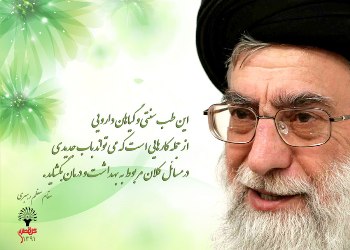
12. Recognition, explanation, promotion, development, and institutionalization of Traditional Persian Medicine.
1-12. Promoting the cultivation of medicinal plants under the supervision of the Ministry of Agricultural Jihad, and supporting the development of scientific and technical innovations in the production and supply of traditional pharmaceutical products under the supervision of the Ministry of Health and Medical Education.
2-12. Standardizing and updating the diagnostic and therapeutic methods of Traditional Medicine and related products.
3-12. Exchanging experiences with other countries in the field of Traditional Medicine.
4-12. Supervision of the Ministry of Health and Medical Education over the provision of Traditional Medicine services and herbal medicines.
5-12. Establishing rational interaction and exchange between Traditional Medicine and modern medicine for the synergy of experiences and therapeutic methods.
6-12. Reforming lifestyle in the realm of nutrition.
13. Qualitative and quantitative development of the medical education system in a targeted, health-oriented manner, based on societal needs, accountable, and equitable, and by training efficient human resources committed to professional Islamic ethics and possessing skills and competencies appropriate to the needs of different regions of the country.
14. Strategic transformation of medical sciences research with an innovation system approach and planning to achieve scientific authority in sciences, techniques, and medical service provision, and transforming Iran into a medical hub in the Southwest Asian region and the Islamic world.
 ادمین انجمن علمی طب سنتی ایران
You can download the instructions and documents you need from the links below.
- Communicating-the-general-policies-of-"health"-in-the-Islamic-Republic-of-Iran / Download
